
Au-delà du soleil
Artist's book, self-published, 2024, edition of 6, 400 pages
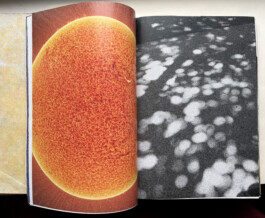
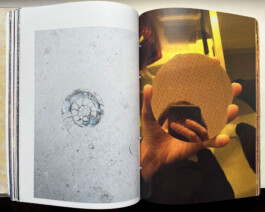
The artist book that I started in 2023 is an ongoing engagement with DUV and EUV photolithography from an artistic perspective. Working with photolithography in a clean room has given me first-hand experience of this technology, including its rules, constraints, and potential possibilities. Photolithography is integral to nearly every integrated circuit, from processors to image sensors, and forms part of the material basis of digital images. Through experimental engagement with this technology, I intend to explore what becomes visible when its patterns, structures, and materials are considered beyond their intended technical function.
This book contains photographs, archival material and texts documenting my visit to a semiconductor cleanroom. There, I photographed DUV lithography machines, silicon wafers and microscopic patterns. I also worked directly with photolithographic equipment, exposing a silicon wafer myself. The book then presents a visual language organised around concepts such as density, layering, gaps, resolution, scale, rhythm, and repetition.
The book is a work in progress.
Only a small selection is shown here. For more, please contact me: stephaniestern@pm.me
Au-delà du soleil
Artist's book, self-published, 2024, edition of 6, 400 pages
The artist book that I started in 2023 is an ongoing engagement with DUV and EUV photolithography from an artistic perspective. Working with photolithography in a clean room has given me first-hand experience of this technology, including its rules, constraints, and potential possibilities. Photolithography is integral to nearly every integrated circuit, from processors to image sensors, and forms part of the material basis of digital images. Through experimental engagement with this technology, I intend to explore what becomes visible when its patterns, structures, and materials are considered beyond their intended technical function.
This book contains photographs, archival material and texts documenting my visit to a semiconductor cleanroom. There, I photographed DUV lithography machines, silicon wafers and microscopic patterns. I also worked directly with photolithographic equipment, exposing a silicon wafer myself. The book then presents a visual language organised around concepts such as density, layering, gaps, resolution, scale, rhythm, and repetition.
The book is a work in progress.
Only a small selection is shown here. For more, please contact me: stephaniestern@pm.me
Au-delà du soleil
Artist's book, self-published, 2024, edition of 6, 400 pages
The artist book that I started in 2023 is an ongoing engagement with DUV and EUV photolithography from an artistic perspective. Working with photolithography in a clean room has given me first-hand experience of this technology, including its rules, constraints, and potential possibilities. Photolithography is integral to nearly every integrated circuit, from processors to image sensors, and forms part of the material basis of digital images. Through experimental engagement with this technology, I intend to explore what becomes visible when its patterns, structures, and materials are considered beyond their intended technical function.
This book contains photographs, archival material and texts documenting my visit to a semiconductor cleanroom. There, I photographed DUV lithography machines, silicon wafers and microscopic patterns. I also worked directly with photolithographic equipment, exposing a silicon wafer myself. The book then presents a visual language organised around concepts such as density, layering, gaps, resolution, scale, rhythm, and repetition.
The book is a work in progress.
Only a small selection is shown here. For more, please contact me: stephaniestern@pm.me
Relics don't end up in Themselves
Fanzine, June 2024, A3+
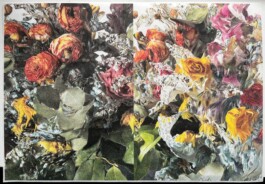
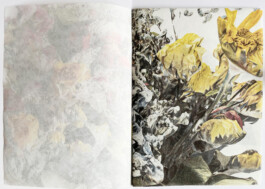
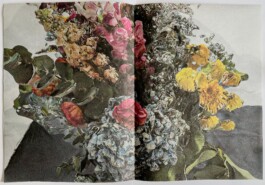
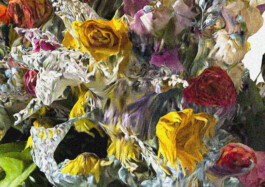
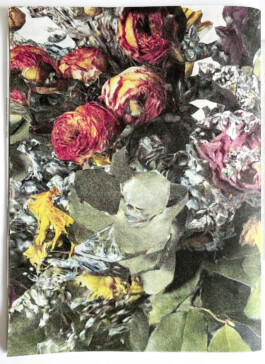
This fanzine presents a series of 3D scans of a bouquet that is beginning to decay. The scans are spread across twelve pages. Created using a smartphone, the scans were produced by walking around the bouquet while the device continuously translated its surface into a three-dimensional model.
The work considers how significance shifts when moving from material to digital form and back again. Does the scanned 3D image serve as a memento mori, offering a means of preserving ephemeral beauty in the face of inevitable decay? Or does the scanning process itself produce something else entirely: a new kind of relic that emerges from the encounter between organic matter and technological processes?
The work considers how non-human agents, such as the scanner and algorithm, participate in this transformation, and asks what persists through this process of translation. Drawing on the tradition of still lifes and their engagement with mortality and transience, the work explores what it means for a relic to exist as digital information.
Relics don't end up in Themselves
Fanzine, June 2024, A3+
This fanzine presents a series of 3D scans of a bouquet that is beginning to decay. The scans are spread across twelve pages. Created using a smartphone, the scans were produced by walking around the bouquet while the device continuously translated its surface into a three-dimensional model.
The work considers how significance shifts when moving from material to digital form and back again. Does the scanned 3D image serve as a memento mori, offering a means of preserving ephemeral beauty in the face of inevitable decay? Or does the scanning process itself produce something else entirely: a new kind of relic that emerges from the encounter between organic matter and technological processes?
The work considers how non-human agents, such as the scanner and algorithm, participate in this transformation, and asks what persists through this process of translation. Drawing on the tradition of still lifes and their engagement with mortality and transience, the work explores what it means for a relic to exist as digital information.
Relics don't end up in Themselves
Fanzine, June 2024, A3+
This fanzine presents a series of 3D scans of a bouquet that is beginning to decay. The scans are spread across twelve pages. Created using a smartphone, the scans were produced by walking around the bouquet while the device continuously translated its surface into a three-dimensional model.
The work considers how significance shifts when moving from material to digital form and back again. Does the scanned 3D image serve as a memento mori, offering a means of preserving ephemeral beauty in the face of inevitable decay? Or does the scanning process itself produce something else entirely: a new kind of relic that emerges from the encounter between organic matter and technological processes?
The work considers how non-human agents, such as the scanner and algorithm, participate in this transformation, and asks what persists through this process of translation. Drawing on the tradition of still lifes and their engagement with mortality and transience, the work explores what it means for a relic to exist as digital information.
Relics don't end up in Themselves
Fanzine, June 2024, A3+
This fanzine presents a series of 3D scans of a bouquet that is beginning to decay. The scans are spread across twelve pages. Created using a smartphone, the scans were produced by walking around the bouquet while the device continuously translated its surface into a three-dimensional model.
The work considers how significance shifts when moving from material to digital form and back again. Does the scanned 3D image serve as a memento mori, offering a means of preserving ephemeral beauty in the face of inevitable decay? Or does the scanning process itself produce something else entirely: a new kind of relic that emerges from the encounter between organic matter and technological processes?
The work considers how non-human agents, such as the scanner and algorithm, participate in this transformation, and asks what persists through this process of translation. Drawing on the tradition of still lifes and their engagement with mortality and transience, the work explores what it means for a relic to exist as digital information.
Relics don't end up in Themselves
Fanzine, June 2024, A3+
This fanzine presents a series of 3D scans of a bouquet that is beginning to decay. The scans are spread across twelve pages. Created using a smartphone, the scans were produced by walking around the bouquet while the device continuously translated its surface into a three-dimensional model.
The work considers how significance shifts when moving from material to digital form and back again. Does the scanned 3D image serve as a memento mori, offering a means of preserving ephemeral beauty in the face of inevitable decay? Or does the scanning process itself produce something else entirely: a new kind of relic that emerges from the encounter between organic matter and technological processes?
The work considers how non-human agents, such as the scanner and algorithm, participate in this transformation, and asks what persists through this process of translation. Drawing on the tradition of still lifes and their engagement with mortality and transience, the work explores what it means for a relic to exist as digital information.
Au-delà du soleil
Artist's book, self-published, 2024, edition of 6, 400 pages
The artist book that I started in 2023 is an ongoing engagement with DUV and EUV photolithography from an artistic perspective. Working with photolithography in a clean room has given me first-hand experience of this technology, including its rules, constraints, and potential possibilities. Photolithography is integral to nearly every integrated circuit, from processors to image sensors, and forms part of the material basis of digital images. Through experimental engagement with this technology, I intend to explore what becomes visible when its patterns, structures, and materials are considered beyond their intended technical function.
This book contains photographs, archival material and texts documenting my visit to a semiconductor cleanroom. There, I photographed DUV lithography machines, silicon wafers and microscopic patterns. I also worked directly with photolithographic equipment, exposing a silicon wafer myself. The book then presents a visual language organised around concepts such as density, layering, gaps, resolution, scale, rhythm, and repetition.
The book is a work in progress.
Only a small selection is shown here. For more, please contact me: stephaniestern@pm.me
Au-delà du soleil
Artist's book, self-published, 2024, edition of 6, 400 pages
The artist book that I started in 2023 is an ongoing engagement with DUV and EUV photolithography from an artistic perspective. Working with photolithography in a clean room has given me first-hand experience of this technology, including its rules, constraints, and potential possibilities. Photolithography is integral to nearly every integrated circuit, from processors to image sensors, and forms part of the material basis of digital images. Through experimental engagement with this technology, I intend to explore what becomes visible when its patterns, structures, and materials are considered beyond their intended technical function.
This book contains photographs, archival material and texts documenting my visit to a semiconductor cleanroom. There, I photographed DUV lithography machines, silicon wafers and microscopic patterns. I also worked directly with photolithographic equipment, exposing a silicon wafer myself. The book then presents a visual language organised around concepts such as density, layering, gaps, resolution, scale, rhythm, and repetition.
The book is a work in progress.
Only a small selection is shown here. For more, please contact me: stephaniestern@pm.me
Au-delà du soleil
Artist's book, self-published, 2024, edition of 6, 400 pages
The artist book that I started in 2023 is an ongoing engagement with DUV and EUV photolithography from an artistic perspective. Working with photolithography in a clean room has given me first-hand experience of this technology, including its rules, constraints, and potential possibilities. Photolithography is integral to nearly every integrated circuit, from processors to image sensors, and forms part of the material basis of digital images. Through experimental engagement with this technology, I intend to explore what becomes visible when its patterns, structures, and materials are considered beyond their intended technical function.
This book contains photographs, archival material and texts documenting my visit to a semiconductor cleanroom. There, I photographed DUV lithography machines, silicon wafers and microscopic patterns. I also worked directly with photolithographic equipment, exposing a silicon wafer myself. The book then presents a visual language organised around concepts such as density, layering, gaps, resolution, scale, rhythm, and repetition.
The book is a work in progress.
Only a small selection is shown here. For more, please contact me: stephaniestern@pm.me
Relics don't end up in Themselves
Fanzine, June 2024, A3+
This fanzine presents a series of 3D scans of a bouquet that is beginning to decay. The scans are spread across twelve pages. Created using a smartphone, the scans were produced by walking around the bouquet while the device continuously translated its surface into a three-dimensional model.
The work considers how significance shifts when moving from material to digital form and back again. Does the scanned 3D image serve as a memento mori, offering a means of preserving ephemeral beauty in the face of inevitable decay? Or does the scanning process itself produce something else entirely: a new kind of relic that emerges from the encounter between organic matter and technological processes?
The work considers how non-human agents, such as the scanner and algorithm, participate in this transformation, and asks what persists through this process of translation. Drawing on the tradition of still lifes and their engagement with mortality and transience, the work explores what it means for a relic to exist as digital information.
Relics don't end up in Themselves
Fanzine, June 2024, A3+
This fanzine presents a series of 3D scans of a bouquet that is beginning to decay. The scans are spread across twelve pages. Created using a smartphone, the scans were produced by walking around the bouquet while the device continuously translated its surface into a three-dimensional model.
The work considers how significance shifts when moving from material to digital form and back again. Does the scanned 3D image serve as a memento mori, offering a means of preserving ephemeral beauty in the face of inevitable decay? Or does the scanning process itself produce something else entirely: a new kind of relic that emerges from the encounter between organic matter and technological processes?
The work considers how non-human agents, such as the scanner and algorithm, participate in this transformation, and asks what persists through this process of translation. Drawing on the tradition of still lifes and their engagement with mortality and transience, the work explores what it means for a relic to exist as digital information.
Relics don't end up in Themselves
Fanzine, June 2024, A3+
This fanzine presents a series of 3D scans of a bouquet that is beginning to decay. The scans are spread across twelve pages. Created using a smartphone, the scans were produced by walking around the bouquet while the device continuously translated its surface into a three-dimensional model.
The work considers how significance shifts when moving from material to digital form and back again. Does the scanned 3D image serve as a memento mori, offering a means of preserving ephemeral beauty in the face of inevitable decay? Or does the scanning process itself produce something else entirely: a new kind of relic that emerges from the encounter between organic matter and technological processes?
The work considers how non-human agents, such as the scanner and algorithm, participate in this transformation, and asks what persists through this process of translation. Drawing on the tradition of still lifes and their engagement with mortality and transience, the work explores what it means for a relic to exist as digital information.
Relics don't end up in Themselves
Fanzine, June 2024, A3+
This fanzine presents a series of 3D scans of a bouquet that is beginning to decay. The scans are spread across twelve pages. Created using a smartphone, the scans were produced by walking around the bouquet while the device continuously translated its surface into a three-dimensional model.
The work considers how significance shifts when moving from material to digital form and back again. Does the scanned 3D image serve as a memento mori, offering a means of preserving ephemeral beauty in the face of inevitable decay? Or does the scanning process itself produce something else entirely: a new kind of relic that emerges from the encounter between organic matter and technological processes?
The work considers how non-human agents, such as the scanner and algorithm, participate in this transformation, and asks what persists through this process of translation. Drawing on the tradition of still lifes and their engagement with mortality and transience, the work explores what it means for a relic to exist as digital information.
Relics don't end up in Themselves
Fanzine, June 2024, A3+
This fanzine presents a series of 3D scans of a bouquet that is beginning to decay. The scans are spread across twelve pages. Created using a smartphone, the scans were produced by walking around the bouquet while the device continuously translated its surface into a three-dimensional model.
The work considers how significance shifts when moving from material to digital form and back again. Does the scanned 3D image serve as a memento mori, offering a means of preserving ephemeral beauty in the face of inevitable decay? Or does the scanning process itself produce something else entirely: a new kind of relic that emerges from the encounter between organic matter and technological processes?
The work considers how non-human agents, such as the scanner and algorithm, participate in this transformation, and asks what persists through this process of translation. Drawing on the tradition of still lifes and their engagement with mortality and transience, the work explores what it means for a relic to exist as digital information.